
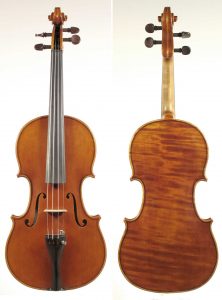
Built to Last…With Your Help!
A fine stringed instrument is designed to last for hundreds of years. Amazingly, many fine instruments built 200 to 300 years ago are still used daily by professional musicians! However, carelessness or neglect can greatly shorten the life of an instrument. To keep your Midwest String Rentals instrument in the best possible condition, we offer this guide to assist you in maintaining your instrument and bow.
Always Do This Simple Routine After Playing
First and foremost, get into the habit of doing these three things every time you finish practicing or playing:
Six Ways to Protect Your Instrument
Click or tap to expand each topic below to learn how to keep your instrument looking and sounding its very best.
Understanding Your Instrument
Knowing a bit about the working parts of your instrument can help us troubleshoot if the instrument is not performing as it usually does!
The Bridge

Each bridge is individually cut and fitted to its instrument so that the feet fit the top exactly and the strings are the correct height above the fingerboard. Over time, normal pressure from the strings tends to pull the bridge toward the fingerboard. If the top of the bridge is not pulled back occasionally (we can show you how to do this yourself), the bridge may warp slightly or even fall over.
If the bridge does fall, loosen the strings, place a soft cloth under the tailpiece to protect the top from the tuners, and bring the instrument to us so we can reposition it in exactly the right place. If the bridge is not correctly positioned, the instrument will not sound its best, no matter how well you play.
The Pegs
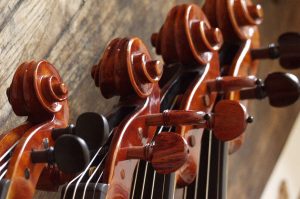
Properly fit pegs should be easy to tune and shouldn’t slip or stick. You will need to apply just a bit of inward pressure to the pegs as you turn them to tune, but please do not force them into their holes. If your pegs are hard to turn or don’t stay in place when you apply moderate pressure, bring the instrument in so we can fix the problem.
The Soundpost
The soundpost is fitted inside the instrument just behind the foot of the bridge on the side of the highest string. Its correct placement is critical to giving your instrument the best possible sound and it should be moved or adjusted only by an expert. If the post falls over, you’ll hear a rattling inside the instrument. If this happens, bring the instrument in to have the post set up properly.
The Strings

Strings may need to be replaced after about six months of use. Around this time they lose responsiveness and quality of sound. If you need replacement strings, please have them changed by your teacher or by us.
Since strings sometimes break unexpectedly before wearing out, it is a good idea to keep an extra set in your case. If you must change the strings yourself, do not remove all them at once as this could make the soundpost fall. Also, be careful not to tune strings too high, since this could cause them to break.
The Bow
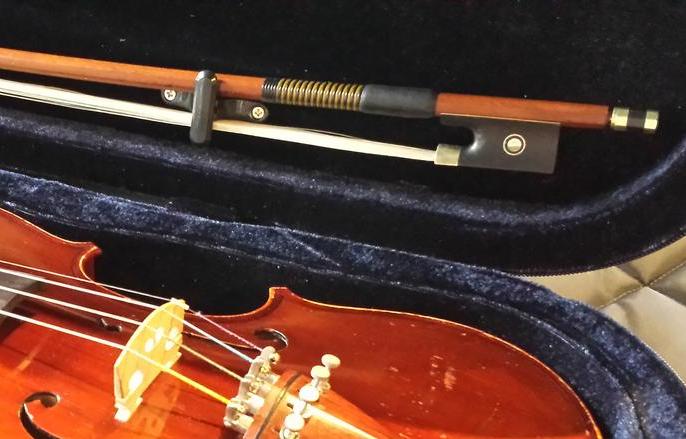
Like the instrument, the bow is fragile and needs proper care. When you play, the bow hair should be just tight enough so it doesn’t touch the stick. Over-tightening can cause the bow to lose its curve and may even cause the stick to break. After playing, always remember to loosen the bow hair until it touches the stick. Avoid touching the hair as the oil from fingers can prevent rosin from sticking.
Handle the bow with care. Never tap the stick on a music stand or any hard object and don’t leave the bow resting on your music stand when it’s not being used, since a blow or fall could easily break the head. Put the bow back in your closed case after playing. Keep it away from direct sunlight, extreme temperatures, and liquids. Damaged bows can sometimes be repaired, but may lose most of their value.